I am very pleased to finally show off the cover of my upcoming non-fiction release, So You Have to Write a Poem: A Guide for the Non-Poetic :) This book has been a very long time coming (as it was once part of my essay guidebook, Homework Helpers: Essays and Term Papers). So I am very, very excited that it will finally be out in the world on Oct 6th! So....here it is :)
At some point, every student must not only learn about different poetic forms, but try their hand at penning a few. It can be daunting, even for those who enjoy poetry.
Following the same plain language, straight forward vein of Ms. McLean’s Homework Helpers: Essays and Term Papers, So You Have to Write a Poem gives novices an easy-to-read guide with simple step-by-step processes and fun examples while giving more advanced poets a technical guide to the rules behind all their favorite poetic forms.
This volume includes nine forms of poetry, along with overviews on poetry basics like meter and rhyme scheme, detailed, easy-to-understand instructions and “cheat sheets” that outline the rules for each form of poetry, and a section with a detailed explanation of how to analyze a poem.
(The cover was designed by my dear friend, the extremely talented author/illustrator Toni Kerr!)
Showing posts with label non-fiction. Show all posts
Thursday, August 7, 2014
Thursday, October 17, 2013
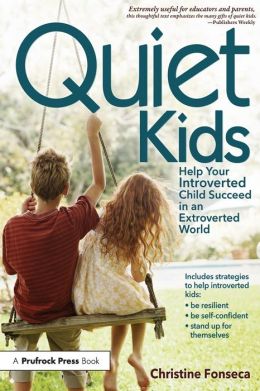
Quiet Kids and Christine Fonseca
I am thrilled to be hosting the fabulous Christine Fonseca, both here and on Operation Awesome today. I love all of Christine's books, but this one is especially of interest to me because my sweet son is an introvert (as is my husband....and as am I lol). This book not only gave me some great insights into my son but into myself and my hubs as well.
If you know (or are) an introvert, you definitely need to get this book! And now, I'll let Christine have the floor :)
~~~~~
I am so happy to announce the official release of my book, Quiet Kids. This book, in addition to being the book I wish I had read as a child, speaks to introversion in children, pulling on the latest research in the area and providing parents and educators strategies to help support introverted children. As most of you know, my writing career started with my books related to gifted children, and while not all gifted children are introverted, a quiet temperament does dominate that particular subgroup of children.
Quiet Kids looks at what it means to be introverted in today's noisy world.
Here is the description of the book:
Being an introverted child is difficult, especially in an ever-increasingly noisy world. Often viewed as aloof, unmotivated or conceited, introverted children are deeply misunderstood by parents, educators and even their peers. That's where Quiet Kids: Helping Your Introverted Child Succeed in an Extroverted World comes in. Designed to provide parents with a blueprint for not only understanding the nature of introversion, Quiet Kids provides specific strategies to teach their children how to thrive in a world that may not understand them. Presented in an easy-to-read, conversational style, the book uses real-world examples and stories from introverts and parents to show parents and educators how to help children develop resiliency and enhance the positive qualities of being an introvert. With specific strategies to address academic performance, bullying, and resiliency, Quiet Kids is a must read for anyone wishing to enhance the lives of introverted children.
Publisher's Weekly was kind enough to call the book "Extremely useful for educators and parents, this thoughtful text emphasizes the many gifts of quiet kids.”
Quiet Kids can be found in Barnes and Noble stores across the United States, as well as online at Amazon, Barnes and Noble, Walmart and other retailers world wide.
As part of the launch of Quiet Kids, I developed a little quiz to help you know if you may have an introvert in the house:
I also have a special giveaway to celebrate the launch:
a Rafflecopter giveaway
THANK YOU for the support of this important book. Be sure to check out the events page on my website to see what other fun things I have planned.
If you know (or are) an introvert, you definitely need to get this book! And now, I'll let Christine have the floor :)
~~~~~
Quiet Kids looks at what it means to be introverted in today's noisy world.
Here is the description of the book:
Being an introverted child is difficult, especially in an ever-increasingly noisy world. Often viewed as aloof, unmotivated or conceited, introverted children are deeply misunderstood by parents, educators and even their peers. That's where Quiet Kids: Helping Your Introverted Child Succeed in an Extroverted World comes in. Designed to provide parents with a blueprint for not only understanding the nature of introversion, Quiet Kids provides specific strategies to teach their children how to thrive in a world that may not understand them. Presented in an easy-to-read, conversational style, the book uses real-world examples and stories from introverts and parents to show parents and educators how to help children develop resiliency and enhance the positive qualities of being an introvert. With specific strategies to address academic performance, bullying, and resiliency, Quiet Kids is a must read for anyone wishing to enhance the lives of introverted children.
Quiet Kids can be found in Barnes and Noble stores across the United States, as well as online at Amazon, Barnes and Noble, Walmart and other retailers world wide.
As part of the launch of Quiet Kids, I developed a little quiz to help you know if you may have an introvert in the house:
- My child prefers to spend time alone or reading after school? T/F
- My child is generally quiet? T/F
- Teachers often characterize my child as shy? T/F
- I often worry that my child has very few friends? T/F
- My children struggles when things are not part of a routine or predictable? T/F
I also have a special giveaway to celebrate the launch:
a Rafflecopter giveaway
THANK YOU for the support of this important book. Be sure to check out the events page on my website to see what other fun things I have planned.
Monday, April 8, 2013
Blog Chain - How Do You Feel About Non-Fiction
This round's topic was chosen by the lovely Sandra who wants to know:
We all know it's important to read fiction if you want to write fiction, but what about reading non-fiction? How much non-fiction do you read? What kinds of non-fiction books do you read, and why? Has reading non-fiction influenced your fiction writing style?
I read a LOT of non-fiction. Biographies mostly. Most specifically, biographies of historical figures (mostly women). I've always been fascinated with the whole royalty scene, queens in particular. Maybe because historically women are seen as a little less capable of ruling than men (and most of the women who have made history have disproved that in spades. What's that saying? Well behaved women rarely make history? So true). :D
Some of my favorites: Eleanor of Acquitaine (this woman ROCKS), Catherine the Great, Lucrezia Borgia, Isabella of France, the wives of Henry VII (and his sisters), Elizabeth I, Marie Antoinette - to name a few :)
I'm also fond of reading encyclopedias. Researching has always been a bit of a time suck for me because I'll start looking up info on one subject and will find myself sucked into a million other fascinating facts. Back in the old days ;) BG (before Google) when we had to open an actual book to research things, I'd sit down with an encyclopedia and a few hours later realize I'd read through half the volume and still hadn't gotten the info I'd originally looked up :)
As a historical romance writer, research is still a big factor in my writing. I try very hard to make sure all the details in my stories are accurate (even in my contemporary stories, there is usually quite a bit of research to be done). I love this part of the process. But, I'll often just leave myself notes in my drafts such as [research this] - because if I take the time right then to research the details, I'd never get that first draft done. So once I'm in the revision stage I generally go through and spend some time researching (as well as researching before I even start writing, during the outline stage).
I also tend to research things I come across in my reading or tv watching or daily life - anything that strikes an interest that I want to learn more about. For instance, I had a lot of fun watching the Ancient Alien series which led to a bit of research on fun things like crop circles and weird phenomenon. :D I also have books on homeopathic medicines, crafty things, lots of How-Tos, (my hubs has an entire bookcase of cookbooks), a few memoirs, and a few other assorted NFs :)
How about you - do you read non-fiction? What sorts of things do you like to read about?
Be sure to stop by Katrina's blog to see what NF tickles her fancy, and stop by Alyson's tomorrow to see what she likes :)
And don't forget to enter my celebration giveaway! You could win a $25 gift card!!! (scroll down to next post) Entries are being taken until Saturday and the winner will be announced on Sunday the 14th!
Tuesday, December 7, 2010
Tutor Tuesday - Settings
Whether you are creating your own settings while writing fiction or analyzing settings while writing non-fiction, this story element is an extremely important part of the equation.
Let's look at non-fiction first. You have to analyze a story for an essay and you decide to look at the settings of your piece. Some stories have more pronounced settings than others. In some books, the setting is more of a subtle background, the stage on which the actors play, while in others, the setting is almost a character in and of itself.
Say you are asked to write a literary analysis of The Scarlet Letter by Nathaniel Hawthorne. Some questions you may want to consider when analyzing the setting of this book are:
* What is the time period? Would this story have worked better set in a different time?
* What is the location? Would the story have worked better elsewhere? Are several locations used in the story? Do they work? Would a specific scene have worked better in another setting? If all the scenes are set in the same location, would the story have worked better set in several different locations?
* What season is the story set in? If it is set in winter, would it be better set in summer? Does the season echo what is happening in the story? (example: Do the love scenes occur in the summer while the trial occurs in the winter, or vice versa?)
* What time of day is it when important events in the story take place? Do the sinister things happen at night while the happy things happen during the day? Why do you think this is?
While the setting may seem like a simple part of the story, it can actually have a huge impact on what is going on. The events detailed in The Scarlet Letter either wouldn't have happened or would have happened in a very different way with a very different outcome if the story had been set someplace like the farthest frontier outpost or an indian village or in the southern states...even during the same time period.
The setting of a story, not just the physical location but everything about it (time of day, season, outside (forest or beach) or inside (and what type of building if inside)) can greatly impact the success of a story. Thoroughly exploring this literary tool can be a great start to your literary analysis.
For fiction, you can ask yourself these same questions as you are creating your settings. Are you creating the best setting for your story? Would it work better somewhere or some time else? Are you giving enough detail for the reader to see the setting without going overboard?
This one can be important. In the first draft of my first novel I described my character pulling up to her home and spent 4 PAGES describing in minute detail every nook and cranny of the house. And I did that several times throughout the book. I was convinced if I didn't give the reader all that description, they wouldn't be able to see the location.
But you know, readers have great imaginations. Give them enough to get them grounded, to let them know what your world looks like, without drowning them in pages of description that they'll never read. I generally start skimming if there is more than a paragraph of description, no matter how beautifully written. Chances are, your readers will too :)
What is your opinion on settings? Do you like long, descriptive passages that describe every detail, or do you like to set things up in your own imagination? What is your favorite literary setting?
Let's look at non-fiction first. You have to analyze a story for an essay and you decide to look at the settings of your piece. Some stories have more pronounced settings than others. In some books, the setting is more of a subtle background, the stage on which the actors play, while in others, the setting is almost a character in and of itself.
Say you are asked to write a literary analysis of The Scarlet Letter by Nathaniel Hawthorne. Some questions you may want to consider when analyzing the setting of this book are:
* What is the time period? Would this story have worked better set in a different time?
* What is the location? Would the story have worked better elsewhere? Are several locations used in the story? Do they work? Would a specific scene have worked better in another setting? If all the scenes are set in the same location, would the story have worked better set in several different locations?
* What season is the story set in? If it is set in winter, would it be better set in summer? Does the season echo what is happening in the story? (example: Do the love scenes occur in the summer while the trial occurs in the winter, or vice versa?)
* What time of day is it when important events in the story take place? Do the sinister things happen at night while the happy things happen during the day? Why do you think this is?
While the setting may seem like a simple part of the story, it can actually have a huge impact on what is going on. The events detailed in The Scarlet Letter either wouldn't have happened or would have happened in a very different way with a very different outcome if the story had been set someplace like the farthest frontier outpost or an indian village or in the southern states...even during the same time period.
The setting of a story, not just the physical location but everything about it (time of day, season, outside (forest or beach) or inside (and what type of building if inside)) can greatly impact the success of a story. Thoroughly exploring this literary tool can be a great start to your literary analysis.
For fiction, you can ask yourself these same questions as you are creating your settings. Are you creating the best setting for your story? Would it work better somewhere or some time else? Are you giving enough detail for the reader to see the setting without going overboard?
This one can be important. In the first draft of my first novel I described my character pulling up to her home and spent 4 PAGES describing in minute detail every nook and cranny of the house. And I did that several times throughout the book. I was convinced if I didn't give the reader all that description, they wouldn't be able to see the location.
But you know, readers have great imaginations. Give them enough to get them grounded, to let them know what your world looks like, without drowning them in pages of description that they'll never read. I generally start skimming if there is more than a paragraph of description, no matter how beautifully written. Chances are, your readers will too :)
What is your opinion on settings? Do you like long, descriptive passages that describe every detail, or do you like to set things up in your own imagination? What is your favorite literary setting?
Tuesday, November 23, 2010
Tutor Tuesday - How to Write a Memoir
We haven't done a Tutor Tuesday in a while, and since I've been in a haze of non-fiction lately (editing my author proofs for my book (squee!!!! done!!!!) and organizing my blog tour, etc, I thought I'd revisit a few tips on how to write a little non-fiction.
Most writers I know or have met, who write NF along with fiction, are memoir writers - or would like to be someday. Writing a memoir isn't that much different from writing fiction - you still want to pull the writer into the story, you are usually trying to make a point with what you are writing, etc. With the one huge, glaringly obvious difference that a memoir is TRUE, as opposed to our less true fiction works :)
Writing a memoir takes a lot more effort than just recording the events of your life as you recall them happening. Here are just a few tips to get you started.
1. Pick a theme
The difference between an autobiography and a memoir is the focus of the narrative. An autobiography is the telling of someone’s life. A memoir focuses on the theme (or themes) of that life (or episode in the life). Think of what you are writing about. What is your message? What is going on? What is the moral to your tale? Are you writing about your life as a cautionary tale? Was your life changed by one spectacular event? What events in your life led up to that? Picking a theme helps narrow your focus so that you don’t get distracted with stories that have nothing to do with that theme.
For instance, if I was focusing my memoir on how I am the unluckiest person in the world who ended up winning the lottery, I’d choose to share events in my life that illustrate that. Share unlucky episodes, anecdotes, and events that led to me winning the lotto. I would steer away from writing about my first puppy or my first car or my high school graduation…unless those events helped to support the theme I want to get across. You want to tell the story of your life…but a lot of stuff happens to us in the course of a lifetime…you need to find a way to narrow that down and trim a bit of the excess.
2. Make it conversational
You gotta make it interesting. Don’t drone on and on about your less than stellar childhood – make the reader feel like you are speaking directly to them. Pull them into your narrative, make them feel what you were feeling, experience what you experienced. Put them in the story.
3. Use your senses
This is a good way to draw your readers in. When you write a scene, think about your five senses. If you are describing a trip to the beach, what did you smell? What color was the ocean? What sounds did you hear? Could you taste the salt on your lips? Did the hot sand burn your toes, or did it feel cool and silky?
4. Ground your story in the real world
This seems like a given, but when you are writing about personal experiences, you are (naturally) focused inward. Add details to your narrative that help place what is happening to you in the real world. Things like cultural references (what movies were playing, what songs were popular, etc), modes of transportation (were wood paneled station wagons littering the roads, or was everyone driving a hybrid?), popular clothes fashions (shoulder pads and teased hair or bell bottom jeans and long, shaggy hair?)….these types of details can be woven into your memoir to help set the setting.
5. Be ethical when writing about living people!
This one can be tough, and it is completely up to you if you will use real names or not. But consider how your story may affect those you include. Telling the world that your sister had an affair might be great for your story, but how will it affect your sister? In my opinion, changing the names of the major players in your narrative don’t adversely affect your memoir in the slightest – and using the real identity of someone who would prefer to remain anonymous could hurt you (and them) much more than it could help your book. Again, this is only my opinion, and this is a subject that can get really touchy, but if your sister’s affair is something you need to include in your book (maybe it is what broke up your own marriage, etc), I don’t consider it dishonest if you change your sister Patty to your cousin Susan – the event is the same, the results are the same, the STORY is the same. Changing a few details to protect someone who has no choice over your freedom of speech is not, in my opinion, dishonest.
Now, saying you were a drug dealer that lived on the streets when in fact you were raised in a million dollar mansion in Beverley Hills is another thing entirely. Changing the facts and events of your life is dishonest…that isn’t a memoir, that is a fiction novel. But changing a name or two…making a sister a cousin…you aren’t changing anything that affects the outcome of your story. Just think long and hard before you include someone that might not want to be included. You have the right to tell your story, but they have the right to keep their lives private if they wish.
6. Above all…KEEP IT HONEST!
As we just discussed, fabricating the facts of your life doesn’t do anyone any good (as some writers have discovered). When you label something a memoir, you are making a sort of promise to your readers that what you are telling them is the truth, that the events that you are sharing really happened. If the events of your life aren’t enough on their own and you need to fabricate experiences to complete the story…then do what you wish, but don’t call it a memoir – call it fiction, because that is what it is.
Will you get hauled into court and called a fraud if you couldn’t remember that it was raining the night you fell overboard into the sea so you said it was a clear night? Probably not. It’s a small, insignificant detail that doesn’t affect the outcome of the experience. Are you being dishonest if you say you fell overboard when you’ve never set foot on a boat in your life? Yeah. You are. Don’t do that. :)
Now, these few tips are just the bare basics of memoir writing. For more detail and specific How To tips, you might want to find a book or two on memoir writing. I recommend Judith Barrington’s Writing the Memoir: From Truth to Art, to start you out.
There is also a chapter in my upcoming book on writing narrative essays (which can be a sort of shortened version of a memoir), along with tips on how to take your writing up a notch.
Have you ever thought about writing a memoir? Or have you written one? Narrative essays (like Chicken Soup for the Soul stories)?
Most writers I know or have met, who write NF along with fiction, are memoir writers - or would like to be someday. Writing a memoir isn't that much different from writing fiction - you still want to pull the writer into the story, you are usually trying to make a point with what you are writing, etc. With the one huge, glaringly obvious difference that a memoir is TRUE, as opposed to our less true fiction works :)
Writing a memoir takes a lot more effort than just recording the events of your life as you recall them happening. Here are just a few tips to get you started.
1. Pick a theme
The difference between an autobiography and a memoir is the focus of the narrative. An autobiography is the telling of someone’s life. A memoir focuses on the theme (or themes) of that life (or episode in the life). Think of what you are writing about. What is your message? What is going on? What is the moral to your tale? Are you writing about your life as a cautionary tale? Was your life changed by one spectacular event? What events in your life led up to that? Picking a theme helps narrow your focus so that you don’t get distracted with stories that have nothing to do with that theme.
For instance, if I was focusing my memoir on how I am the unluckiest person in the world who ended up winning the lottery, I’d choose to share events in my life that illustrate that. Share unlucky episodes, anecdotes, and events that led to me winning the lotto. I would steer away from writing about my first puppy or my first car or my high school graduation…unless those events helped to support the theme I want to get across. You want to tell the story of your life…but a lot of stuff happens to us in the course of a lifetime…you need to find a way to narrow that down and trim a bit of the excess.
2. Make it conversational
You gotta make it interesting. Don’t drone on and on about your less than stellar childhood – make the reader feel like you are speaking directly to them. Pull them into your narrative, make them feel what you were feeling, experience what you experienced. Put them in the story.
3. Use your senses
This is a good way to draw your readers in. When you write a scene, think about your five senses. If you are describing a trip to the beach, what did you smell? What color was the ocean? What sounds did you hear? Could you taste the salt on your lips? Did the hot sand burn your toes, or did it feel cool and silky?
4. Ground your story in the real world
This seems like a given, but when you are writing about personal experiences, you are (naturally) focused inward. Add details to your narrative that help place what is happening to you in the real world. Things like cultural references (what movies were playing, what songs were popular, etc), modes of transportation (were wood paneled station wagons littering the roads, or was everyone driving a hybrid?), popular clothes fashions (shoulder pads and teased hair or bell bottom jeans and long, shaggy hair?)….these types of details can be woven into your memoir to help set the setting.
5. Be ethical when writing about living people!
This one can be tough, and it is completely up to you if you will use real names or not. But consider how your story may affect those you include. Telling the world that your sister had an affair might be great for your story, but how will it affect your sister? In my opinion, changing the names of the major players in your narrative don’t adversely affect your memoir in the slightest – and using the real identity of someone who would prefer to remain anonymous could hurt you (and them) much more than it could help your book. Again, this is only my opinion, and this is a subject that can get really touchy, but if your sister’s affair is something you need to include in your book (maybe it is what broke up your own marriage, etc), I don’t consider it dishonest if you change your sister Patty to your cousin Susan – the event is the same, the results are the same, the STORY is the same. Changing a few details to protect someone who has no choice over your freedom of speech is not, in my opinion, dishonest.
Now, saying you were a drug dealer that lived on the streets when in fact you were raised in a million dollar mansion in Beverley Hills is another thing entirely. Changing the facts and events of your life is dishonest…that isn’t a memoir, that is a fiction novel. But changing a name or two…making a sister a cousin…you aren’t changing anything that affects the outcome of your story. Just think long and hard before you include someone that might not want to be included. You have the right to tell your story, but they have the right to keep their lives private if they wish.
6. Above all…KEEP IT HONEST!
As we just discussed, fabricating the facts of your life doesn’t do anyone any good (as some writers have discovered). When you label something a memoir, you are making a sort of promise to your readers that what you are telling them is the truth, that the events that you are sharing really happened. If the events of your life aren’t enough on their own and you need to fabricate experiences to complete the story…then do what you wish, but don’t call it a memoir – call it fiction, because that is what it is.
Will you get hauled into court and called a fraud if you couldn’t remember that it was raining the night you fell overboard into the sea so you said it was a clear night? Probably not. It’s a small, insignificant detail that doesn’t affect the outcome of the experience. Are you being dishonest if you say you fell overboard when you’ve never set foot on a boat in your life? Yeah. You are. Don’t do that. :)
Now, these few tips are just the bare basics of memoir writing. For more detail and specific How To tips, you might want to find a book or two on memoir writing. I recommend Judith Barrington’s Writing the Memoir: From Truth to Art, to start you out.
There is also a chapter in my upcoming book on writing narrative essays (which can be a sort of shortened version of a memoir), along with tips on how to take your writing up a notch.
Have you ever thought about writing a memoir? Or have you written one? Narrative essays (like Chicken Soup for the Soul stories)?
Tuesday, October 19, 2010
Tutor Tuesday - Beginnings
(REMINDER: Stop by the Operation Awesome Blog and become a follower for a chance to win a ton of books and a possible gift certificate! We are up to almost 4 books that I'm giving away already! To enter, be or become a follower on the OA Blog and leave a comment on THIS POST or THIS ONE. Contest ends Saturday!)
One thing that is just as important in non-fiction as in fiction is a beginning. No matter what you are writing, whether it be a paper on the history of plumbing or a fast-paced thriller novel, you've got to get your beginning right.
Beginnings should introduce the topic at hand, let the reader know what they are about to read. Are you writing an essay on the history of donuts? You better have a thesis sentence in your opening paragraphs that lets the reader know that right up front. Or maybe you're writing a romantic suspense novel. Somewhere in that first chapter, the reader should what type of book they are reading. Meaning, that beginning needs to introduce both the romance and the suspense.
This doesn't mean you need to lay all your cards out on the table. For non-fiction, you usually are more open about what you are discussing, but even here you can hold back a little, give the reader a hint of what your arguments are, but save your big slamdunk winning evidence for the body of the essay or paper. (Though for non-fiction, you'll generally want to list your arguments from strongest to weakest instead of saving the best for last).
And for fiction, you can definitely keep a few surprises in store. But by the end of the first chapter, the reader should know what the main problem is, the issue the MC will be struggling with throughout the book, and by extension, they should know what type of book they are reading. For example, if by the end of the first chapter, the MC, who is a titled young lady who lives in Victorian England, has met a cute boy and seen a ghost, I have a pretty good idea it's going to be a paranormal historical with at least a hint of romance.
Beginnings can be difficult to nail and are something I always struggle with, especially in fiction. My first chapter NEVER ends up being my "real" first chapter. For non-fiction this isn't as much of an issue because you can, and should, come right out and say "this is what I'm discussing and here are my main arguments."
But it can still be difficult to get that opening exactly right. In fact, while in line edits with my soon-to-be-published book on writing essays and term papers, my editor and I ended up adding a whole new first chapter...because there was important information my readers need that I had buried in the middle of the book instead of showcasing right from the start.
So take your time on your beginnings. The beginning is what hooks your reader, no matter what genre you may be writing. It's worth it to get it right.
How do you do with beginnings? Are they easy for you, or do you, (like me), spend more time on them than the rest of the book put together? :)
One thing that is just as important in non-fiction as in fiction is a beginning. No matter what you are writing, whether it be a paper on the history of plumbing or a fast-paced thriller novel, you've got to get your beginning right.
Beginnings should introduce the topic at hand, let the reader know what they are about to read. Are you writing an essay on the history of donuts? You better have a thesis sentence in your opening paragraphs that lets the reader know that right up front. Or maybe you're writing a romantic suspense novel. Somewhere in that first chapter, the reader should what type of book they are reading. Meaning, that beginning needs to introduce both the romance and the suspense.
This doesn't mean you need to lay all your cards out on the table. For non-fiction, you usually are more open about what you are discussing, but even here you can hold back a little, give the reader a hint of what your arguments are, but save your big slamdunk winning evidence for the body of the essay or paper. (Though for non-fiction, you'll generally want to list your arguments from strongest to weakest instead of saving the best for last).
And for fiction, you can definitely keep a few surprises in store. But by the end of the first chapter, the reader should know what the main problem is, the issue the MC will be struggling with throughout the book, and by extension, they should know what type of book they are reading. For example, if by the end of the first chapter, the MC, who is a titled young lady who lives in Victorian England, has met a cute boy and seen a ghost, I have a pretty good idea it's going to be a paranormal historical with at least a hint of romance.
Beginnings can be difficult to nail and are something I always struggle with, especially in fiction. My first chapter NEVER ends up being my "real" first chapter. For non-fiction this isn't as much of an issue because you can, and should, come right out and say "this is what I'm discussing and here are my main arguments."
But it can still be difficult to get that opening exactly right. In fact, while in line edits with my soon-to-be-published book on writing essays and term papers, my editor and I ended up adding a whole new first chapter...because there was important information my readers need that I had buried in the middle of the book instead of showcasing right from the start.
So take your time on your beginnings. The beginning is what hooks your reader, no matter what genre you may be writing. It's worth it to get it right.
How do you do with beginnings? Are they easy for you, or do you, (like me), spend more time on them than the rest of the book put together? :)
Tuesday, September 28, 2010
Tutor Tuesday - Looking at Characters
First of all, happy 7th birthday to my little boy!!!! Can't believe how old he's getting :)
Second, welcome to Tutor Tuesdays :D With the release of my non-fiction book fast approaching, (and since I closed down my other blog) I decided I'd devote one day a week to non-fiction matters, including writing tips for essays, papers and other NF things (memoirs, narratives, and anything else you can think of). Just a little non-fiction info to spice up the place :D
Our recent awesome Blogging Experiment topic (on Writing Compelling Characters) reminded me of a post I did on my other blog about focusing on characters when writing analysis essays.
If you have to write a book report or an essay analyzing a work of literature (or even a film), looking at the characters in the piece is an excellent way to start.
Characters are one of the most important, if not THE most important, element in any work of literature. Without a character, there is no story. Even if the story is about a frog...that frog is your main character. So, characters are a great element to look at when analyzing a work of literature for a paper or essay. Here are some questions you could ask about the characters in the story:
This also applies to fiction - take a look at your own stories and ask yourself the questions above. Analyzing your characters the way an English student writing an essay would is a great way to make sure they are fleshed out, well-rounded, unique, and doing the job you need them to do.
Have you ever given your characters a good analysis?
Second, welcome to Tutor Tuesdays :D With the release of my non-fiction book fast approaching, (and since I closed down my other blog) I decided I'd devote one day a week to non-fiction matters, including writing tips for essays, papers and other NF things (memoirs, narratives, and anything else you can think of). Just a little non-fiction info to spice up the place :D
Our recent awesome Blogging Experiment topic (on Writing Compelling Characters) reminded me of a post I did on my other blog about focusing on characters when writing analysis essays.
If you have to write a book report or an essay analyzing a work of literature (or even a film), looking at the characters in the piece is an excellent way to start.
Characters are one of the most important, if not THE most important, element in any work of literature. Without a character, there is no story. Even if the story is about a frog...that frog is your main character. So, characters are a great element to look at when analyzing a work of literature for a paper or essay. Here are some questions you could ask about the characters in the story:
- Who are the characters?
- Who is the main character?
- Who is the main villain?
- What qualities/vices/characteristics/quirks/mannerisms do these characters have?
- What do these characteristics do for a particular character?
- What is the author trying to show with a certain character? For example, is the extreme evilness of the main villain supposed to symbolize the evil side of mankind? Does it work? Why or why not?
- Do the characters personify anything? Qualities/characteristics/feelings? For example, if you were analyzing a story about a girl named Hope who went up against a villain named Dr. Evil, do these characters exhibit the qualities of hope and evil? Is Hope an optimistic person, etc?
- What flaws do the characters have? Or are they too perfect?
- Are the characters believable? Can you relate to them? Are they likable, intriguing, mysterious? How do these qualities affect the story?
This also applies to fiction - take a look at your own stories and ask yourself the questions above. Analyzing your characters the way an English student writing an essay would is a great way to make sure they are fleshed out, well-rounded, unique, and doing the job you need them to do.
Have you ever given your characters a good analysis?
Saturday, August 8, 2009
Blog Chain - Multitasking All The Way!!

Back on the blog chain. We have several new members joining us so I'd like to give a huge welcome to Amanda Bonilla, Sarah Bromley, Shaun David Hutchinson, Rebecca Knight, and Bonny Anderson. We are so excited to have you guys with us!!
This round's topic was chosen by our wonderful Terri. She wanted to know:
Do you focus on one project at a time, or do you have many irons in the fire at any given moment?
Bonny answered this question before me and Shaun is up next so be sure to visit their blogs to hear their take on this question.
As for me, well, if you’ve read my blog for a while, you’ll know that I’m one of those “many irons in the fire” type girls. I will get on a roll sometimes, with one project or another, and focus specifically on one thing for a few days, weeks, or even months at a time. But for the last several months at least I’ve had at least two projects going on at all times; my YA Urban Fantasy, and my non-fiction book.
Because fiction and non-fiction belong in such completely different worlds, switching back and forth presents no problems for me. What I’m working on at any given moment is mostly dictated by my children. I don’t need to concentrate as much with my non-fiction. It comes much easier. So I be on the computer working on it while my kids are running around screaming and climbing all over me. If I’m going to work on fiction while the kids are awake, I write by hand. They don’t bug me as much and I can follow them from room to room (or outside) scribbling away while they play.
It is also nice to have more than one project going because if I get stuck on one, I switch to the other. Focusing my mind on something different usually frees it up and the answer for whatever had me stuck very often comes to me while working on something else.
If I’m stuck on everything, I either do research for a project or I take a break from novels and textbooks and write a children’s picture book. I love doing these. I can do them quickly and they are so much fun to do. My kids and I will often write them together, so it’s something writing related that I can do and still include them, and at the end of the day, I’ve got a completed creative project…whether it’s my main project or not.
I don’t know if I could have two projects of the same genre going at the same time. Probably not…I have enough trouble staying in the right character’s voice at any given time without mixing in more than one main character. I definitely have ideas for several same-genre projects going on at the same time. This is where that research comes in – if I’m stuck on one thing, I’ll research either info I need for a current project, or something that will go straight in my idea file.
Having more than one project is actually kind of relaxing for me. I know I always have something to work on. If I finish something or get stuck on something, I know there is always something else I can work on. That way, none of my time is wasted because no matter what I’m doing, it is accomplishing something, be it for current or future projects.
Monday, August 3, 2009
How does your writing process work?

Quote of the Day:
It’s like making a movie: All sorts of accidental things will happen after you’ve set up the cameras. So you get lucky. Something will happen at the edge of the set and perhaps you start to go with that; you get some footage of that. You come into it accidentally. You set the story in motion, and as you’re watching this thing begin, all these opportunities will show up. ~Kurt Vonnegut
For my first novel, I wrote in order (with a few exceptions). I started as close to the beginning as I could and worked forward. For my second novel, I just wrote as the scenes took me. I started somewhere in the middle, wrote forward and backward and sideways. If I got stuck, I moved on to another scene. Then I filled in the holes. It worked really well for me.
My mother thought my writing process was both interesting, funny, and totally confusing. I brought her my notebooks on our recent visit so I could show her how the book started out. She was amazed I could write like that. Yet, I know many authors who skip around.
I also know quite a few that outline their books. This isn’t something I’ve ever been able to do. Even when I try, things turn out differently anyways, so there really isn’t a point to it in my mind. For me at least.
However, my new project (brand spanking new, not much more than an idea right now) is one that, due to the nature of it, I will have to outline. And it’s torture for me. I know there will be some additions that won’t be outlined, but for the most part, I simply HAVE to know what will be going in the book. I need to know what each chapter will contain, in detail, or this project is never going to work.
I don’t want to say that this has taken the enjoyment out of it for me, because it hasn’t. This project is sort of a mix between fiction and non-fiction, so the preliminary research and outlining is necessary, interesting, and fun in it’s own way. But it isn’t the type of free “let-the-muse-take-me-where-it-will” kind of writing I usually immerse myself in. Once I start writing, I hope that part will come, but for now, it feels more like work than fun.
While I think this project will suck me in just as much as any other I’ve done, *sigh* I just don’t like the outlining which I actually find sort of funny. In real life, I’m a list type person. I go shopping, I have a list. We go on a trip, I make a list of what we need to do before we go, what needs to be packed, etc. My non-fiction book, I have my Table of Contents in front of me at all times and check off the chapters as they are completed.
But fiction…that is the one area of my life that ISN’T planned out ahead. I have the idea, of course, the basic storyline, characters, plot twists…but I like to fly by the seat of my pants and let things just happen. So it’s weird to try and enforce a structure where there previously hasn’t been one. I’m sort of interested to see how I handle this ;-D
How about everyone else? How do you write? Do you outline? Just let your fingers fly and see what they come up with? If you write different genres, do you handle them differently?
Tuesday, July 21, 2009
How to Write a Non-Fiction Proposal

Ha ha!! It's not really that bad, I promise ;-D
Quote of the Day:
A book proposal is to publishing what the resume is to the job search...At its best, the proposal can function as a sophisticated sales brochure...The more impressive it is...the higher your advance is likely to be. That alone should be incentive enough for you to create the very best proposal you can...The proposal process must be taken seriously; it's the price of admission to being a published author.
~Jeff Herman, in the introduction to Write the Perfect Proposal: 10 Proposals that Sold and Why
I have had non-fiction book ideas for years, but one of the things that always stopped me from pursuing those ideas was the fact that I had to write a proposal in order to sell my idea. The non-fiction proposal scared me, intimidated me, had me cowering in the corner with my hands over my eyes.
I’d seen a few…they were huge! Like sixty-some pages long (with the sample chapters). They include sections on markets and platforms and competition and a bunch of other stuff that I had no clue how to even begin to write. I Googled a lot, but all the posts I had seen on writing these monstrosities confused me to no end. Even the ones that had clearly defined lists of the information I needed to include. I knew what I needed to do, theoretically, but actually putting that into action threw me into a vortex of confusion, despair, and terror.
So, I convinced myself I’d never be able to write a decent proposal. I occasionally worked on material for a non-fiction book that I knew would never see the light of day, but I let the idea of the proposal keep me from going after something I am really pretty good at doing.
And then a friend of mine, Carolyn, and I were talking one day. She is a soon-to-be published non-fiction author (who also writes fiction), and she encouraged me to quit letting the proposal beat me down and go for it. She recommended an awesome book, Jeff Herman’s Write the Perfect Proposal: 10 Proposals That Sold and Why, and sent me her own proposal as an example.
I was still scared to death and fairly sure I’d never make it out alive, but I looked over her proposal, read through the book many times, taking notes along the way, and finally sat down to draft my own proposal. It wasn’t easy; it is a ton of work…hard work. But, once I got into it, I realized that it wasn’t as scary as I had thought. It was doable. You just have to take it slowly, one section at a time.
While the Overview should be first, the rest of these sections can be moved around a bit. If you have an awesome platform, you could put the About the Author section first, etc. I've just listed them in the order I had them in my proposal.
Section One: Overview
This is your hook. In this section, you briefly describe what your book is about. Make it good, interesting, catchy. It shouldn’t be too long (the overviews I have seen were mostly less than two pages, in some cases only a couple paragraphs. Mine was about two and a half pages, double-spaced).
Ask yourself these questions:
What is my book about?
What makes it different from the other books out there? (be brief, you can go into more detail on this in the section on competition)
Why does the world need my book?
Who will read it? (you don’t need to go into detail here, save that for the market section – but in general, who will the audience be).
In my case, my book is a handbook for writing essays, papers, and poetry. Well, there are a lot of books out there that do this. So, I was sure to mention why my book was different.
My first paragraph introduced the issue at hand…writing assignments such as these can be difficult. If I could have found them, I probably would have listed a statistic or two on how many students fail their Language Arts classes. Good, solid facts and statistics are a nice addition, but not totally necessary.
This also depends on your book, though. Carolyn’s upcoming book is a guide to help writers include realistic information on psychology in their work. She had several sources that cited good percentages, statistics, and quotations describing how often this type of information is used in books, film, and television and how often it is inaccurate. In her proposal, the statistics worked well. In mine, everyone knows that there are a lot of students in our country and a lot of them need help in English class…statistics aren’t really necessary to help prove that.
My second paragraph went into further detail…I mentioned that in my experience, people who are already confused become more so when confronted with guidebooks that are so technically written they do nothing more than make a bad situation worse.
My third paragraph described why my book solved this problem by describing what my book is about and going into a little detail about the tone and format of my book. And then I added in a bulleted list illustrating exactly why my book is the perfect writing guide and what a reader will get out of it. Remember, be confident! An agent or editor won’t have confidence in your work if you don’t! And remember, keep it brief. You can expound on most of this stuff in later sections.
One of the reasons my overview was a bit longer than normal was because I also included a few quotations from educators and school psychologists who had read my sample chapters and gave me their endorsement. These could have been included in another section in the proposal (in fact, my agent is having me include an entire endorsement section in my proposal for when we submit it to publishers), but for the initial querying to agents, I included them right up front in the overview.
Section Two: Market
Here is where you go into detail about your audience. This is one of the sections that intimidated me the most, but ended up being one of the easiest to write. Maybe it is the title…MARKET…it just sounds scary :D But really, all you are doing here is listing who would be interested in reading your book. And you already know this because you probably had an audience in mind when you wrote the book. Brainstorm every possible market for your book, then list them in order of importance or size.
For my book, my main, or primary, market is educational. The largest audience for my book will be students, from junior high through college. I added some statistics here about how many learning disabled students there are in the United States because this is not common knowledge and my book will be very helpful for the learning disabled.
My secondary market is another division of educational – homeschooling parents. There are a lot of parents who homeschool their children (I added a statistic here to show exactly how many), and these parents need books to educate their children.
I also listed a possible third market – it’s more of a long shot, but it is a possibility, so I put it in there. This would be writers. Freelance bloggers, writers, etc could find my book useful if they wanted to make sure the articles they were writing were technically sound, or beginning poets could use it to get all the rules right.
I added statistics here to show how many freelance writers there are in the United States, how that job group has grown in the last few years and mentioned the projected growth.
Section Three: Competition
There will almost always be competition for your book and there is no point trying to pretend otherwise. Editors and agents are fully aware there are other books out there that will be competing with yours, so you might as well do your homework.
This section is where you can help illustrate why your book is different from those already on the shelves. I started my section by saying, “Though there are many handbooks and textbooks available that teach essay, paper, and poetry writing skills, many prove inadequate to the task.” I briefly described why and listed a few books in the same category as my book and pointed out why mine was better.
For example, you could say, “This title by so and so is good in that it does this or that. However, it does not do this, this, and this. My book does.”
I did this for a couple titles and then just made a list of several titles (there are a lot in my category, so I just picked a few). List the title, the author, the publisher, the year published, and the current selling price for each competitive title.
Section Four: About the Author
This is where you talk yourself up, toot your own horn, list everything and anything that illustrates how wonderful you are and why you are the best person to write your book. This is where you talk about your platform, how you can help sell your book. Do you have degrees, personal experience, professional experience? Do you give workshops, speeches, or classes on your subject? Have you been previously published? If so, list your books, their publication date, and your publisher, along with any other pertinent information like if your books were bestsellers or won any awards. Do you have access to radio shows, blogs, websites, conferences, etc, where you can promote your book? Are you related to the President of the United States, sister of Bill Gates, best friends with Brad Pitt or someone else that will be able to help you get this book out in the world?
This was another section that intimidated me, because my platform is pretty weak. I have the degrees and the personal experience necessary to make me an expert on my subject. But I don’t have the professional experience. I am not a teacher, I don’t speak at conferences or conventions, I have not been previously published (well, in a few Chicken Soup for the Soul books, but not in anything that would help me out in this arena).
But that is okay. Yes, it helps tremendously if you have a strong platform. To give you the honest truth, a lot of agents or editors may reject you if your platform isn’t strong enough. They like to publish books when the author has a guaranteed way of making a lot of sales. That is why celebrities can publish whatever kind of crap they want – because they have a built-in audience guaranteed to buy the book.
Definitely do what you can to build your platform before and after you write your book – but if you don’t have a large platform, don’t let it stop you. There are things you can do to help with that. And if you have an awesome book, it will sell itself.
Despite my weak platform, I knew I had a great book idea, I knew I could pull it off, and I knew if someone would just read what I had written, they’d love it. And I was right, they did. But, because my platform is so weak, I am finishing my manuscript before submitting to publishers and am including that endorsement section in my proposal (quotes from people who DO have the right background who are willing to stand behind my book), where with someone with a solid platform might be able to submit their book right away.
In any case, this is the section to say whatever wonderful things about yourself that you can – most importantly, things that will help illustrate why you are the right person to be writing your book.
Section Five: Promotion
This is where you list everything that you can do to help promote your book. Don’t list anything here unless you are sure you can do it. You can list things like:
Websites or blogs (yours or others) that will promote your book
Other avenues where you can promote it yourself such as radio shows, television shows, conferences you often speak at…if you are teacher who can pick your own textbooks and you can use your book in your class, you can mention that here
If you can create media kits, flyers, newsletters, etc or have other ways of advertising your book, list them here
If you are independently wealthy or have a grant or some other type of funding to help advertise your book, list it
Basically, this section is where you want to illustrate everything and anything you can do to advertise and promote your book.
Section Six: Chapter Outline and Synopsis
Now, I’ve seen this done a few different ways. Some people will list their Table of Contents in the Overview, or include a highly annotated Table of Contents in lieu of an outline or synopsis. Many I saw (and this is what I did) listed the Table of Contents (marking which chapters were included in the proposal as sample chapters) and then went through the chapters of the book, giving a brief overview or synopsis of each chapter.
My book has twenty-five chapters, so I was a bit hesitant to do this, but it didn’t end up being a huge production. You don’t have to go into great detail. Just briefly describe what each chapter will include. Each of my chapters includes a How To section and examples, so I stated that at the beginning of the section, and then in the chapter abstracts, I just wrote a paragraph or two on my chapters.
For example, as my book is a handbook for writing assignments, the chapters are broken down by the different types of essays and poetic forms that are out there. Chapter Four is on Critical Essays, Chapter Sixteen on Ballads, and so on. So for each chapter, I wrote a paragraph or two describing what Critical essays or ballads are (basically what I put for my intro of each chapter in the actual book), and left it at that, since I had already pointed out that each chapter would have its own How To section and specific examples.
For your own proposals, just briefly describe the content of your chapters.
Section Seven: Sample Chapters
Here is where you will include two or three of the actual chapters of your book. Now, you do not have to have the book finished in order to get signed by an agent or sell your book to a publisher. That is the fun with non-fiction books. You can sell them based on an idea.
However, you do have to have at least a couple chapters (two is the norm) so the agent or editor can get an idea of what your book will look like when it is finished.
When you are finished with your proposal, I highly suggest having at least one person look it over for basic proofreading and to see if it hooks them. A proposal is like a huge, blown-up query…you still need to hook that agent or editor into wanting your book. Even more so, because there usually isn’t a finished manuscript for them to request. They sign you or buy your book based solely (most of the time) on your proposal. But don’t let that scare you! Present your book (and yourself) in the best way you can, polish up those sample chapters, and send it out :)
And that’s it! Yes, it’s a LOT of work, and there is a lot of research involved, especially if you choose to include statistics or quotations in addition to your competition titles. And I highly recommend looking at Jeff Herman's book (or any other book you can find on writing proposals, but I like his especially because he includes annotated proposals as examples). Several agent's websites and blogs have posts on this topic and if you can get a hold of some example proposals to look at, that is always a good idea. I'm a very visual person, so looking at a finished product helps me understand how to get there myself :)
If you take it slowly, one section at a time, it really isn’t nearly as intimidating. Most of these sections are no more than a page long, some less than that. I think my largest section was two pages long…until you get to the Outline, Chapter Abstracts, and Sample Chapters of course :)
So just focus on the small chunks, complete it with a title page and Proposal Table of Contents, and before you know it, you’ll have a finished proposal ready to ship out to agents and editors :D Good luck!!
Wednesday, June 24, 2009
WIP Wednesday
I always figured that every word that managed to squeeze itself from my pen had to be immortal. Turns out they're all disposable. What a relief.
~Tom Howe
Well I had an awesome week this week. First up, my YA Urban Fantasy WiP - I have completed through chapter 18, so I only have 3 chapters left. Very exciting. I have been letting my mother and sister read it as I get the chapters done, and they have been harassing me by phone and email whenever I slow down. Great motivation for getting done, and very encouraging - I at least have 2 fans that don't think it sucks :D
And on to the big non-fiction news:

I am very pleased to report that I have signed with Krista Goering, who will represent my non-fiction book, From Papers to Poetry. I spoke with her the other day and she was just wonderful. She is interested in taking a look at my fiction projects also, so I may just win the jackpot and have one agent rep everything I do. But in either case, I am very excited to have her as my non-fiction agent :) Now I just have to get the manuscript finished LOL
Subscribe to:
Posts (Atom)